

Beginner Guide
Tips to Win Your First Run
Last updated: March 23, 2026
Quick Answer
Start with the Ironclad — he has the most HP and heals after every fight. Keep your deck small (20–30 cards), remove basic Strikes early, upgrade cards at rest sites instead of healing, fight Elites for relics, and always check enemy intents before playing cards. Your deck is your build — focus it around a single strategy rather than grabbing every card offered.
Game Modes Explained
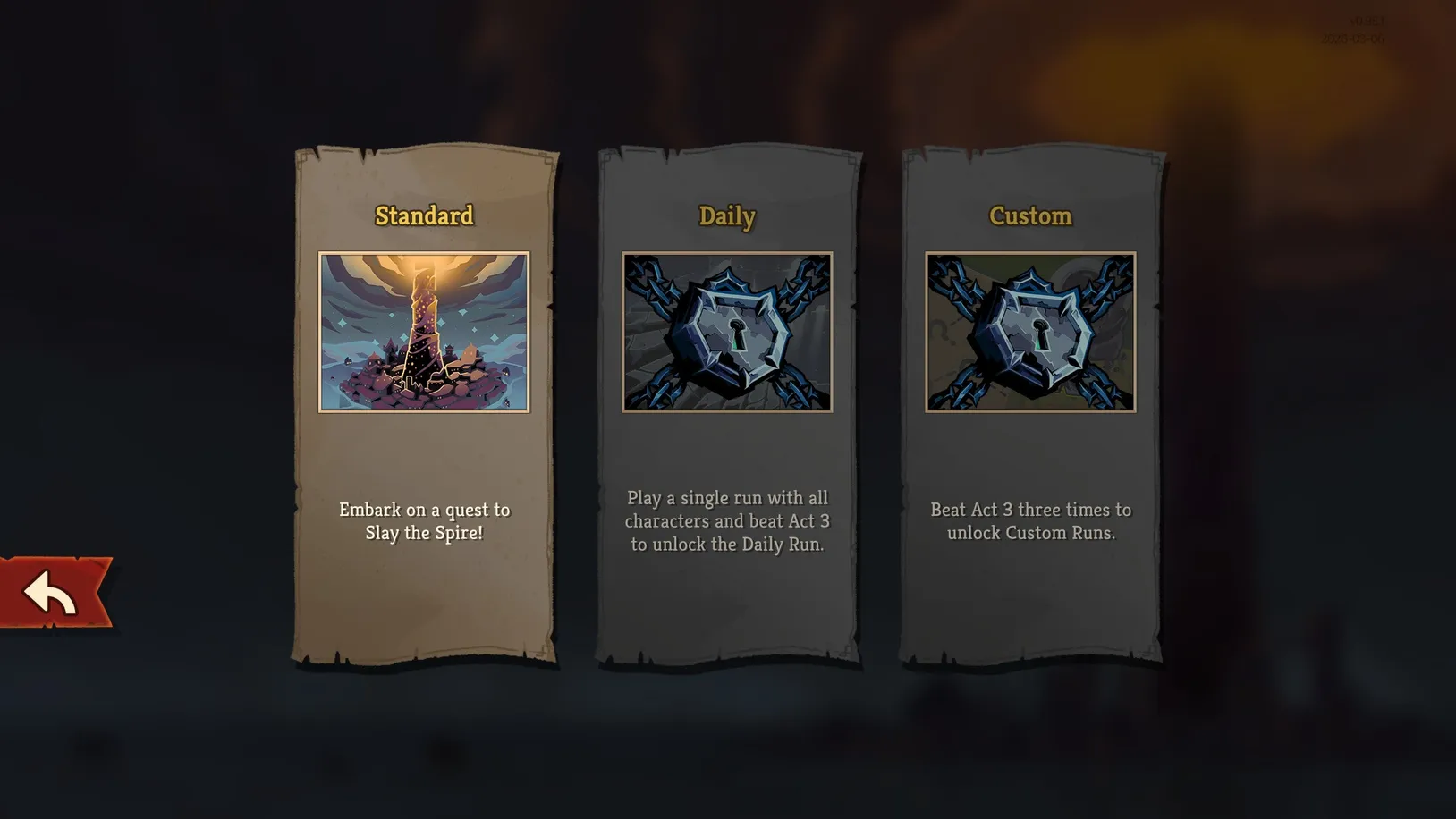
When you launch Slay the Spire 2 and select Singleplayer, you'll see three run types. Two are locked initially — here's what each offers:
| Mode | Unlock Requirement | What It Is |
|---|---|---|
| Standard | Available immediately | The core roguelike mode. Pick a character, ascend three Acts, defeat the final boss. |
| Daily Run | Beat the game once + play all characters | A fixed Spire layout shared by all players worldwide. Compete on the daily leaderboard. |
| Custom Run | Beat the game 3 times | Set custom seeds and add mutators for unique challenge runs. |
Start with Standard runs. Everything you learn there carries directly into Daily and Custom modes.
Choosing Your First Character
Slay the Spire 2 launches with five playable characters. Not all are available immediately — you unlock them through the Epoch progression system as you play. Here's a quick overview ranked by beginner-friendliness:
| Character | Difficulty | Why |
|---|---|---|
| Ironclad | ★☆☆ Easy | 80 HP, Burning Blood heals 6 HP after every fight. Forgiving of mistakes. Browse Ironclad cards → |
| Silent | ★★☆ Medium | Poison damage is intuitive. Shivs give consistent output. Starts with 12 cards. Browse Silent cards → |
| Necrobinder | ★★☆ Medium | Osty absorbs damage for you. Doom mechanic is powerful once you understand it. Browse Necrobinder cards → |
| Defect | ★★★ Hard | Orb management adds complexity. Flexible but requires understanding Orb types. Browse Defect cards → |
| Regent | ★★★ Hard | Two resources (Stars + Forge) to manage. High ceiling but steep learning curve. Browse Regent cards → |
Recommendation: Play your first 3–5 runs as the Ironclad. His higher HP and passive healing give you room to learn the game's systems without being punished for every small mistake.
Slay the Spire Keys: What Beginners Should Know
If you searched for slay the spire keys, the important beginner takeaway is simple: keys are an optional objective that adds extra pressure, and most first clears are easier when you focus on core fundamentals before forcing key routes.
Treat keys as a route-planning problem: if grabbing a key costs too much HP or blocks your best upgrade timing, skip it for that run. Winning consistently with a clean deck and strong relic pathing is more valuable than forcing every optional objective early.
Slay the Spire Unlocks: How Progress Works
For slay the spire unlocks, progression is tied to repeated runs rather than one perfect run. As you play, you gain Epoch progress that unlocks additional characters, cards, relics, and potions over time.
The practical rule for beginners: do not reset runs too aggressively. Even failed runs still move your account forward, which increases your future card pool and makes later climbs more consistent.
Act Progression: A Simple Beginner Plan
- Act 1: Stabilize your deck and prioritize efficient card upgrades.
- Act 2: Add scaling and defensive consistency so bad draws do not end runs.
- Act 3: Route safely, preserve HP, and plan specifically for the final boss pattern.
This act-by-act approach keeps your run stable while you learn enemy patterns and card evaluation. Once this baseline is consistent, layering in harder objectives is much easier.
Meeting Neow & Starting Blessings
Who is Neow in Slay the Spire 2?
Neow in Slay the Spire 2 is one of the Ancients. She unlocks after your first run on a save file, then appears at the start of each new run to offer one of three opening boons.
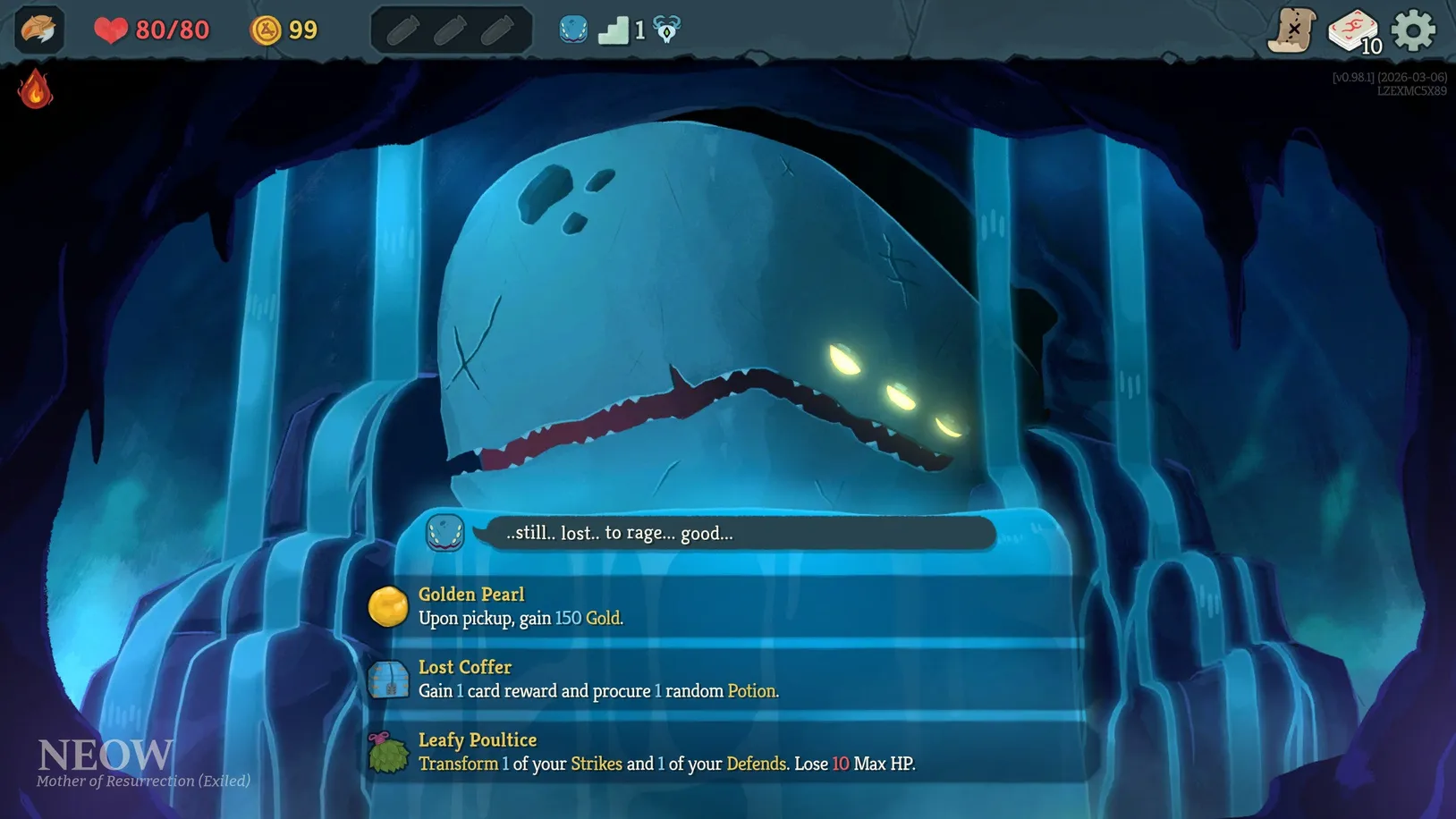
After your very first run (win or lose), you unlock Neow, a whale-like Ancient who greets you at the start of every subsequent run. Neow offers three starting blessings — pick one to shape your early run:
- Bonus gold (e.g. Golden Pearl: 150 gold) — Great for buying a key relic or card removal from the first Merchant
- Card reward + potion (e.g. Lost Coffer) — Gives you an early power spike
- Card transformation (e.g. Leafy Poultice) — Turns basic cards into random upgrades at the cost of some HP
There's no universally "best" blessing. Gold is safe, transformation is high-variance. As a beginner, gold is the most forgiving choice — it lets you visit a Merchant early to remove a Strike or grab a strong card.
How to Read the Map
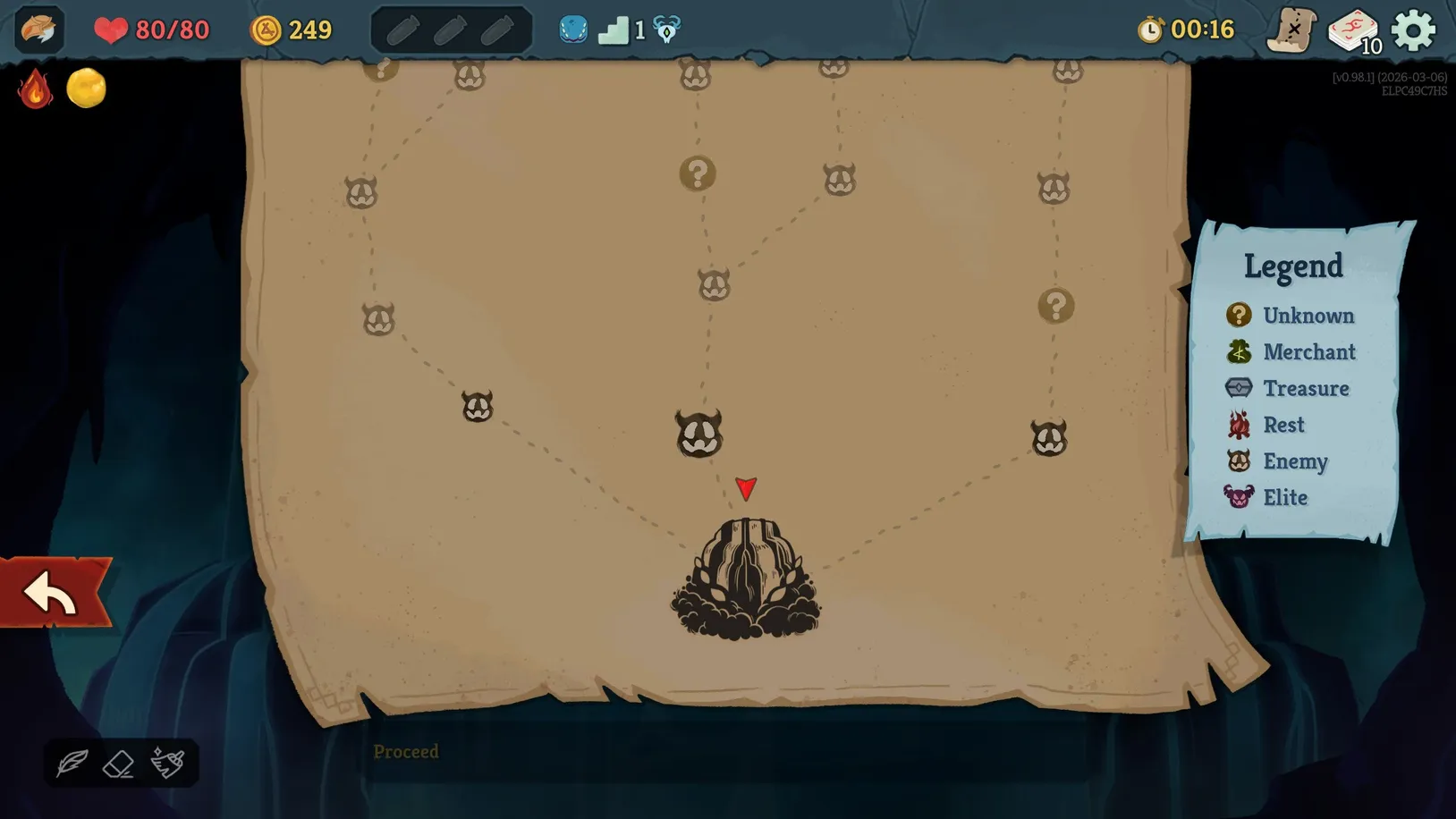
The Spire map is procedurally generated with branching paths. Understanding the icons is essential for planning your route:
| Icon | Node Type | What to Expect |
|---|---|---|
| ⚔️ | Enemy | Standard combat encounter. Rewards: gold, card choice, sometimes a potion. |
| 👹 | Elite | Mini-boss. Tougher, but always drops a relic. Worth fighting when healthy. |
| 🔥 | Rest Site | Rest (heal 30% max HP) or Smith (upgrade one card). Upgrade is usually better. |
| 💰 | Merchant | Buy cards, relics, and potions. Pay to remove cards (75g first, +25g each time). |
| 📦 | Treasure | A chest containing a relic. Always worth visiting. |
| ❓ | Unknown | Random: could be an event, enemy, merchant, or treasure. |
Pro tip: Check which boss awaits at the end of the act immediately. Build your deck to counter that boss's mechanics. Plan routes that include at least 2 Elite fights per act for the relic drops — relics are the biggest source of permanent power in a run.
Combat 101
Every fight in Slay the Spire 2 follows the same rhythm: draw 5 cards, spend your energy (you start with 3), end your turn, and the enemy acts. Here's what you need to know:
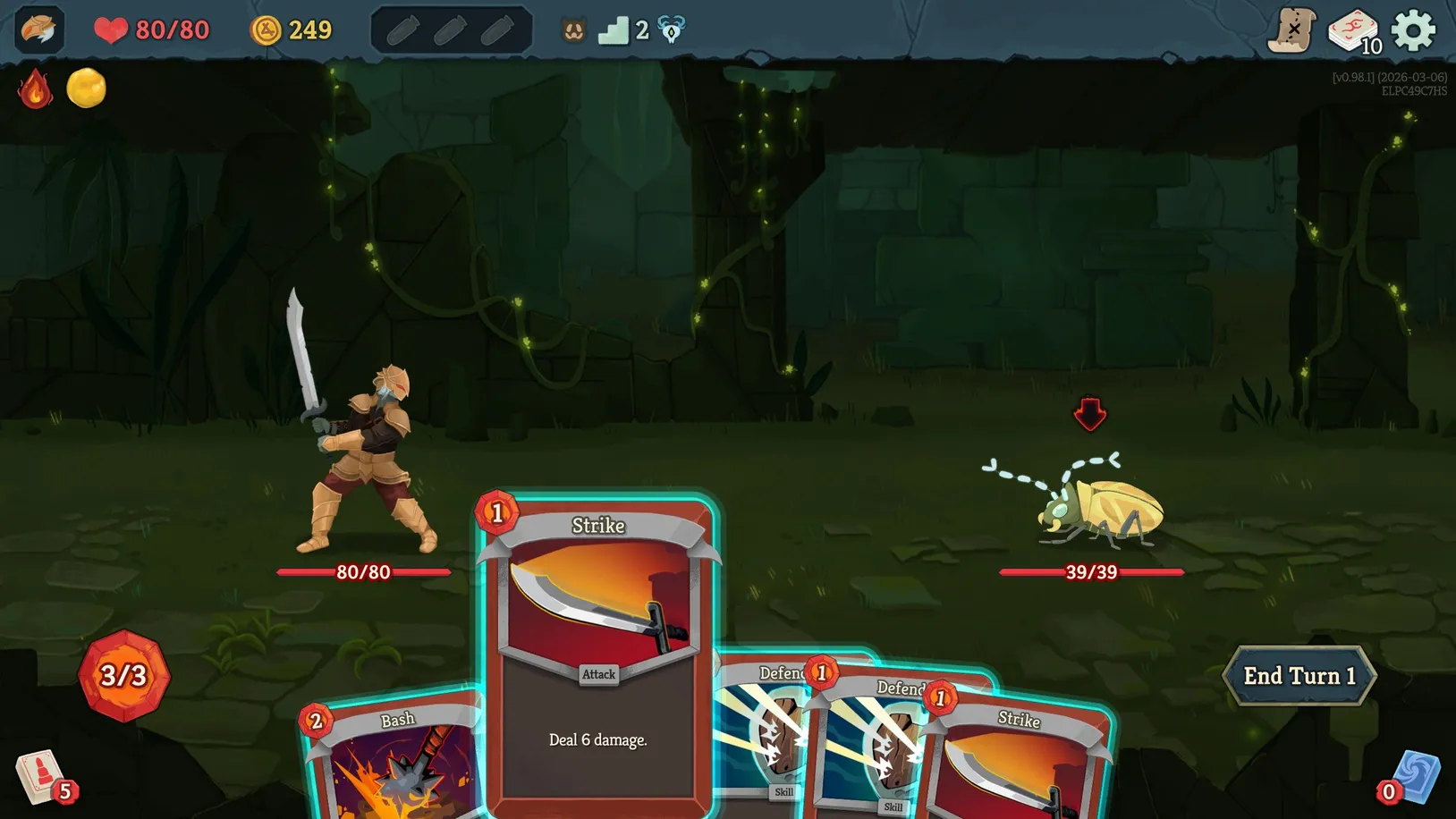
Card Types
- Attacks — Deal damage, may apply debuffs like Vulnerable. Most cost 1 energy.
- Skills — Defensive or utility effects. Defend grants Block, others draw cards or apply buffs.
- Powers — Permanent effects for the rest of combat. Play these early to maximize value.
Reading Enemy Intents
The icon above each enemy shows what they'll do this turn. A sword with a number means they'll attack for that much damage. A shield means they're blocking. A purple swirl means they're applying a debuff. Always read intents before playing cards.
- If an enemy is about to hit you for 20 damage, prioritize Block cards.
- If an enemy is buffing/debuffing, use the turn to deal damage or set up Powers.
- If an enemy has low HP, kill it rather than blocking its attack — one fewer enemy means less damage next turn.
Block Doesn't Stack (By Default)
Block expires at the start of your next turn. Don't over-invest in Block beyond what you need to survive the incoming hit. Exception: certain relics and Powers (like Barricade on the Ironclad) let Block carry between turns — these are game-changing.
No Encounter Is Trivial
Unlike many roguelikes, Slay the Spire 2 has almost no trash mobs. Every encounter can kill you in a few turns if you're not paying attention. Many enemies have nasty behaviors that cost significant HP if you don't understand their patterns. Prioritize killing enemies quickly over turtling behind Block — the longer a fight lasts, the more HP you'll lose overall.
Deck Building Fundamentals
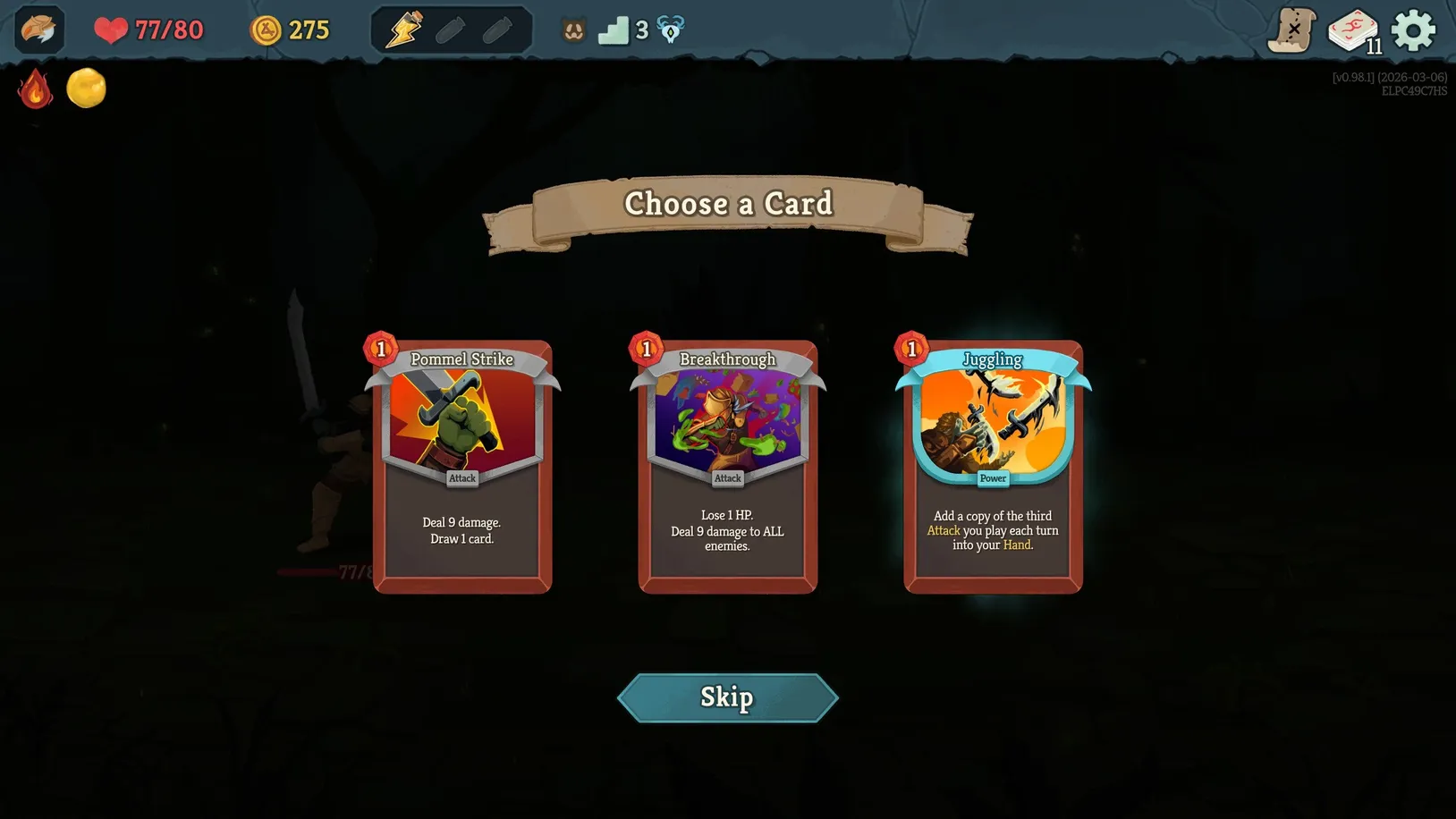
Your deck is your build. Unlike RPGs where you equip gear, in Slay the Spire 2 your cards define everything about your character's capabilities. Every decision — adding, removing, upgrading, or transforming cards — shapes your run.
The Golden Rule: Synergy Over Power
A mediocre card that fits your strategy beats a powerful card that doesn't. If you're building around Poison as the Silent, a common Poison card is worth more than a flashy rare attack that doesn't synergize. Before accepting any card reward, ask: "Does this card help my current strategy win fights faster?"
Skipping Card Rewards
After every combat you're offered three cards. You don't have to take one. Once your deck has a clear direction (usually mid-Act 1), start skipping cards that don't directly improve your strategy. A lean, focused deck draws its key cards more often.
Pick a Direction by End of Act 1
By the time you fight the Act 1 boss, you should know your build's win condition. For the Ironclad, that might be "stack Block → Body Slam." For the Silent, "Poison everything." For the Necrobinder, "stack Doom for execution kills." Commit to a direction and don't chase random shiny cards.
Optimal Deck Size
You draw 5 cards per turn from a shuffled deck. Deck size directly impacts how consistently you draw your best cards:
| Deck Size | Chance to Draw a Specific Card | Verdict |
|---|---|---|
| 10 cards | 50% per hand | Ultra-consistent, hard to achieve |
| 20 cards | 25% per hand | Sweet spot for focused builds |
| 30 cards | ~17% per hand | Good for versatile builds |
| 45 cards | ~11% per hand | Bloated — key cards rarely appear |
Aim for 20–30 cards in most runs. There are exceptions — the Clone enchantment can create viable 100+ card decks, and scaling cards like Perfected Strike reward larger decks — but as a beginner, smaller is almost always better.
Key Deck Management Keywords
- Draw — Pull extra cards from your deck into your hand. More draw = more options per turn.
- Exhaust — Remove a card from play for the rest of this combat. Thins your active deck mid-fight.
- Discard — Put a card into your discard pile. Useful for cycling past unwanted cards or triggering Sly effects.
When to Remove Cards
Your starting deck has ~10 basic cards (Strikes and Defends). These are weak — once you have better attack and defense options, removing them makes your deck dramatically more consistent.
How to Remove Cards
- Merchant: Pay 75 gold for the first removal, increasing by 25 gold each time. The most reliable method.
- Events: Some events offer free card removal — always consider taking it.
- Transformation: Turn a weak card into a random one. Best on basic Strikes/Defends you were going to remove anyway.
Removal Priority
- Basic Strikes (they deal less damage than nearly any attack card you'll find)
- Basic Defends (once you have better block options)
- Curses (always remove these — they have negative effects and clog your hand)
- Off-strategy cards you accidentally picked up
Upgrading Cards & Rest Sites
Rest sites give you two choices: Rest (heal 30% max HP) or Smith (upgrade one card). Upgraded cards get a "+" suffix and gain boosted effects — more damage, more Block, lower energy cost, or enhanced special effects.
The #1 beginner mistake is always choosing Rest. If you're constantly healing, your deck isn't killing enemies fast enough. Upgrading your best card makes every future fight easier, which means you take less damage overall.
When to Smith vs Rest
- Smith when you're above 50% HP and have a high-impact card to upgrade
- Rest only when you'd die in the next fight without healing
- Upgrade your win condition first — the card that defines your build. For Ironclad Block decks, upgrade Body Slam (cost drops to 0). For Silent Poison, upgrade Noxious Fumes (extra Poison per turn.
Don't waste upgrades on cards you plan to remove. Upgrading a basic Strike is almost never correct — that upgrade slot is better spent on your core strategy cards.
Relics & Why Elites Matter
Relics are permanent passive items that last your entire run. They range from small bonuses (heal 4 HP when entering an unknown room) to build-defining effects (Barricade: Block no longer expires). A strong relic collection is often the difference between winning and losing.
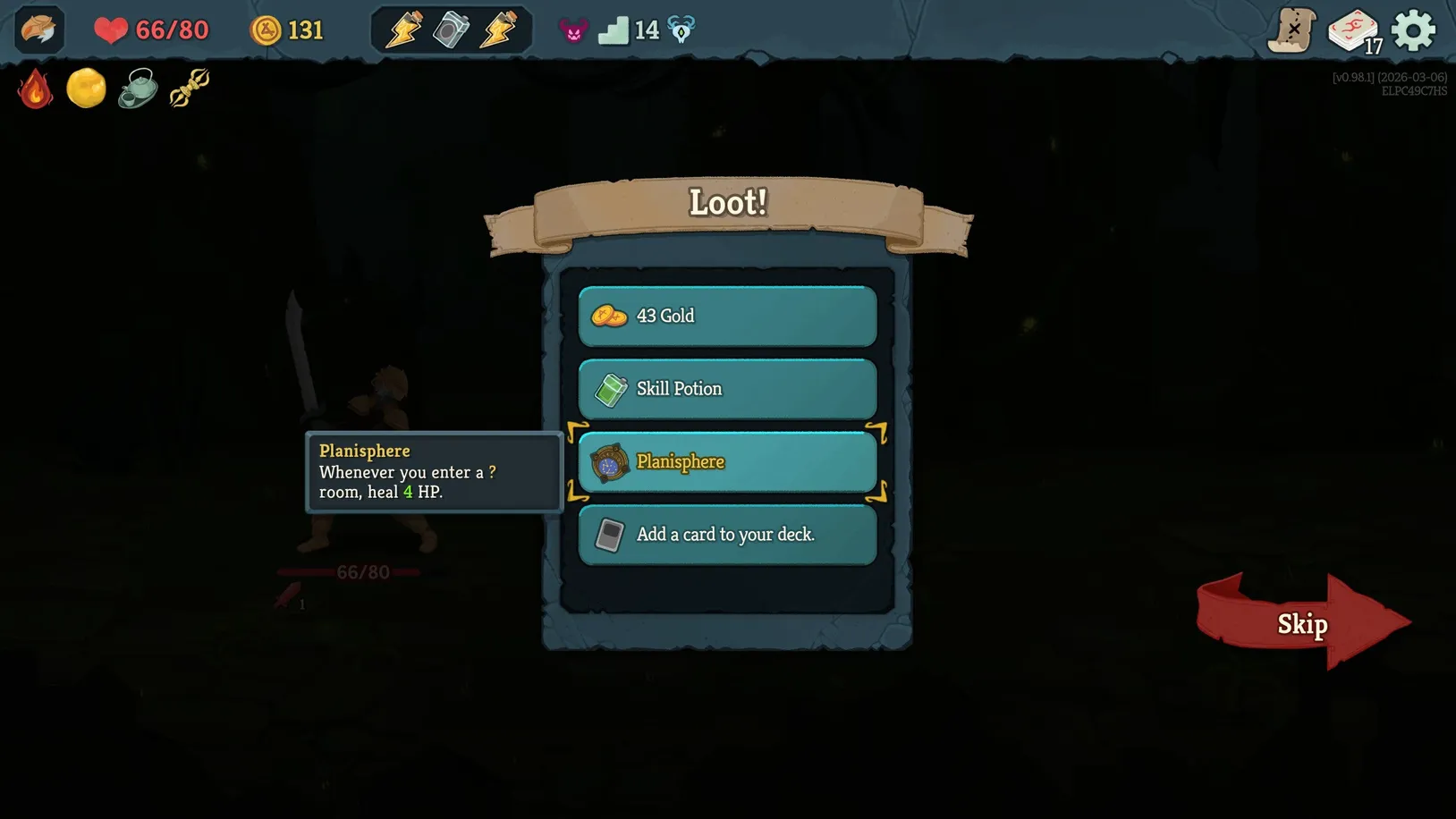
Where to Get Relics
- Elite enemies — Always drop a relic. Fight at least 2 per act.
- Treasure chests — Guaranteed relic. Always visit these nodes.
- Merchants — Sell relics for gold. Worth buying if it fits your build.
- Boss rewards — Powerful relics for defeating act bosses.
- Ancients — Offer relic-like blessings at the start of Acts 2 and 3.
Starting Relics
Every character begins with a unique relic that defines their identity:
- Ironclad — Burning Blood: Heal 6 HP at the end of every combat. Forgives mistakes.
- Silent — Ring of the Snake: Draw 2 extra cards on your first turn. Explosive starts.
- Defect — Cracked Core: Channel 1 Lightning Orb at the start of combat.
- Necrobinder — Bound Phylactery: At the start of your turn, Summon 1. Your companion Osty absorbs damage and attacks.
- Regent — Divine Right: At the start of each combat, gain 3 Stars.
Events, Merchants & Potions
Events
Events are story-driven encounters with choices. Some offer free card removal, relics, or transformations. Others impose curses or HP loss. Read the options carefully — many events that seem risky are actually worth taking for the long-term reward.
The Merchant
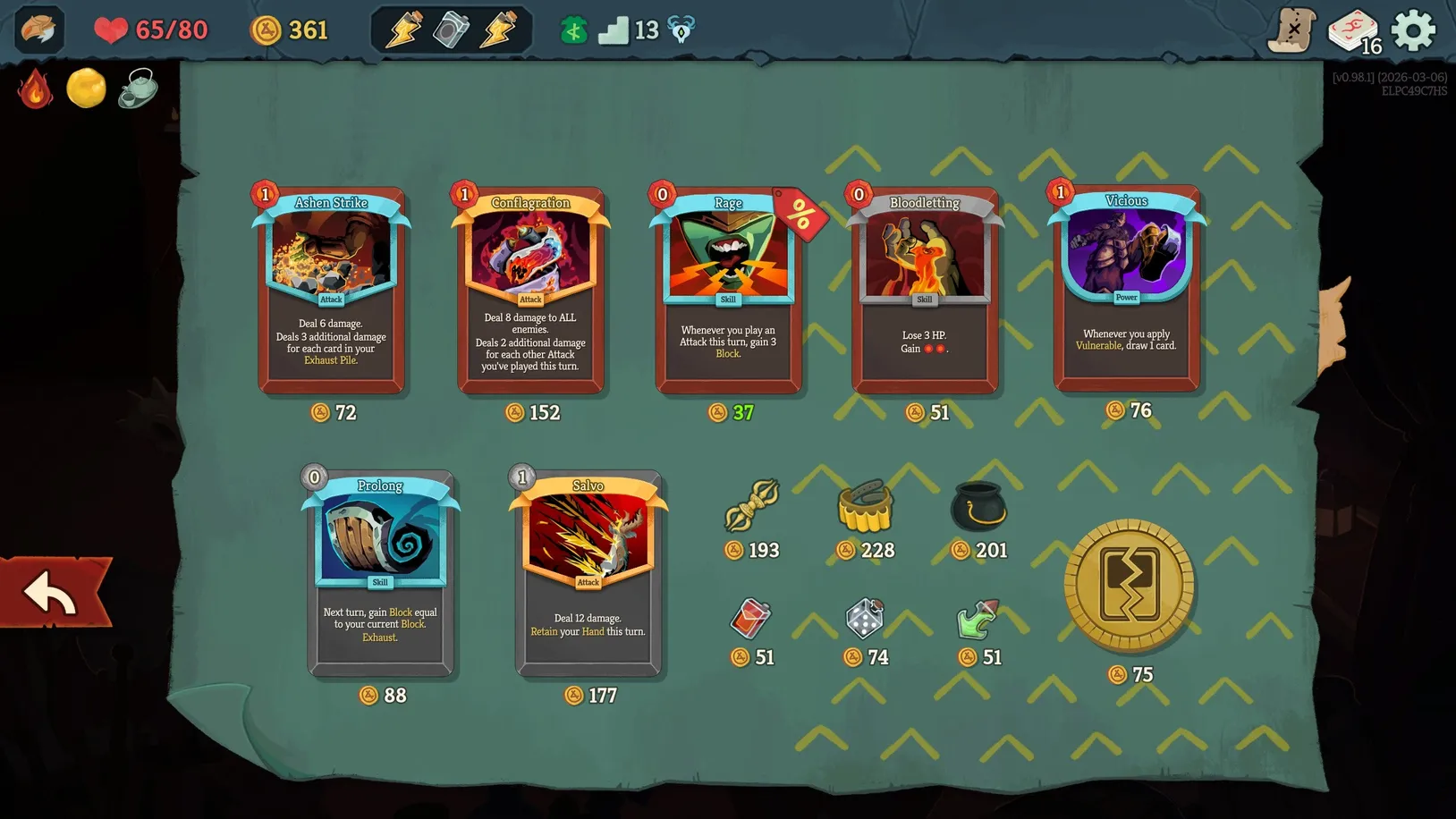
Merchants sell cards, relics, potions, and card removal. Key things to look for:
- Discounted cards (green price text with % icon) — great value
- Card removal — nearly always worth the gold, especially in Act 1
- Build-defining relics — if a relic is perfect for your strategy, buy it even if it's expensive
Potions
Potions are single-use consumables. The most common beginner mistake is hoarding them "for the boss." Use potions whenever they save you significant HP during regular fights — you'll find more before the boss anyway. That said, save your strongest potions for Elite encounters or the boss when you know you'll need the extra power.
Video: 10 Beginner Tips for a Good Start
This video covers 10 essential beginner strategies including encounter awareness, character learning curves, deck focus, card synergies, and when to be aggressive vs. defensive.
10 Tips for Your First Win
- Start with the Ironclad. His 80 HP and Burning Blood relic give you the most room to make mistakes while learning.
- Keep your deck under 30 cards. A focused deck draws key cards more often. Skip card rewards that don't fit your strategy.
- Remove basic Strikes first. They deal 6 damage — almost any card you find is better. Visit the Merchant early for removal.
- Upgrade at rest sites unless you'll die. A single upgrade on your win condition card pays dividends for every remaining fight in the run.
- Fight Elites for relics. Route your path through at least 2 Elite nodes per act. Relics compound in power — the more you have, the stronger you get.
- Read enemy intents every turn. The information is free. Use it to decide whether to attack, block, or set up for next turn.
- Kill weak enemies fast. If an enemy has 10 HP left, kill it rather than blocking its attack. Fewer enemies alive = less total incoming damage.
- Don't hoard potions. Use them during tough regular fights or Elite encounters. Saving all potions for the boss usually means taking unnecessary damage along the way.
- Check the Act boss early. The boss is revealed when you enter the act. Build your deck to counter their specific mechanics.
- Embrace failure. Slay the Spire 2 is a roguelike — dying is how you learn. Each run unlocks new cards and relics through the Epoch system, making future runs easier.
Bonus: Common Beginner Mistakes to Avoid
- Only taking attack cards. Big numbers feel good, but you can't win on offense alone. Every character has broken defensive cards — prioritize them alongside damage.
- Avoiding campfire sites. Rest sites aren't just for healing — upgrading the right card there can be more valuable than any single card reward.
- Not previewing upgrades. Before upgrading at a rest site, check what each upgrade does. Avoid upgrades that just add minor damage — go for ones that change the card's mechanics or reduce energy cost.
- Ignoring Powers. Powers aren't just for offense. Defensive powers that trigger every turn (like Feel No Pain or Crimson Mantle) can save more HP over a fight than any single skill card.
Frequently Asked Questions
What's the best character for beginners in Slay the Spire 2?
How many cards should my deck have in Slay the Spire 2?
Should I rest or upgrade at campfires?
Which cards should I remove first?
What is the best strategy to consistently win in Slay the Spire 2?
Is every run winnable in Slay the Spire 2?
What are Epochs in Slay the Spire 2?
What's the difference between Exhaust and Discard?
Does Slay the Spire 2 have multiplayer?
How do I unlock Daily and Custom runs?
This guide covers Slay the Spire 2 fundamentals as of Early Access. Game mechanics may change with updates — check our Slay the Spire 2 patch notes for the latest changes. Last reviewed March 19, 2026.